

Apple Business Connecti integreerimise väljakuulutamine
Lisateave →
As the Nordic restaurant landscape becomes more competitive and digitally driven, building lasting guest relationships is more important than ever. To explore how technology can help restaurants turn occasional visitors into loyal regulars, we spoke with Leeni Heino, Marketing and Engagement Specialist at Cluby. In this interview,
Leeni shares her perspective on the power of first-party data, the evolution of loyalty programs, and practical steps any restaurant can take to grow guest retention and sustainable revenue in 2025 and beyond.
In my view, the biggest opportunity lies in using technology to build and retain customer relationships. The Nordic restaurant scene is innovative when it comes to food and service, but still underdeveloped in customer relationship management. When restaurants start collecting first-party data — knowing who visits, how often, and what they buy — they can communicate directly and give guests a reason to return.
This move from an anonymous transaction to a recognised relationship is where I see the biggest untapped potential for growth in 2025. By using simple tools to unlock this data, restaurants can strategically drive repeat visits and build lasting loyalty, rather than constantly relying on expensive new customer acquisition.
“The biggest opportunity lies in using technology to build and retain customer relationships. When restaurants start collecting first-party data—knowing who visits, how often, and what they buy—they can communicate directly and give guests a reason to return.”
The technology is transforming daily operations by making them significantly more approachable and centralised across the entire hospitality sector. Businesses, such as restaurants and nightclubs, are now looking for tools that are simple to use and genuinely effective at reducing administrative workload.
The fundamental shift is the move from disparate systems to one unified solution that enables multiple functions without overcomplicating things. This unified platform provides hospitality businesses with new channels for customer engagement. For example, a restaurant can leverage technology for direct marketing through email, or create digital passes that replace ineffective physical solutions, such as traditional paper stamp cards, with a solution stored directly on the customer's phone.
The biggest change technology offers is not 'more tools,' but rather a unified platform that provides a clear, centralised view of sales and loyalty data across the business. This means technology supports hospitality instead of replacing it. In practice, this leads to less admin and more focus on delivering excellent guest experiences.
The shift in guest expectations is profound: they now demand smooth, connected, and personal experiences—the same seamless standard they get from world-class retail or streaming services. The key change is the expectation of recognition; guests do not want to feel anonymous, and they are increasingly looking for something extra—added value or a unique experience driven by that recognition.
But above all, restaurants should just start somewhere. Begin with one simple, consistent tool, like a unified loyalty platform, and use it systematically to secure those direct guest relationships. This approach allows restaurants to grow results step-by-step. Over time, that commitment to simple, consistent use always pays off, turning anonymous transactions into valued relationships.
I believe the single biggest mistake restaurants make is seeking an instant silver bullet and over-complicating the initial implementation. This stems from the belief that technology alone will deliver results without genuine commitment or internal effort. A common error is adopting a complex system, expecting immediate, game-changing results, as if the tool will do all the work automatically.
When these results don't appear instantly, operators suffer from 'tech fatigue' and abandon the solution. Furthermore, this mistake often involves adopting several disconnected tools that add complexity instead of reducing it.
My advice is simple: adopt a step-by-step approach to growth and choose solutions that are easy to implement and genuinely useful from day one. Good technology shouldn’t require a big transformation; it should fit naturally into existing routines and make daily restaurant work easier, not harder.
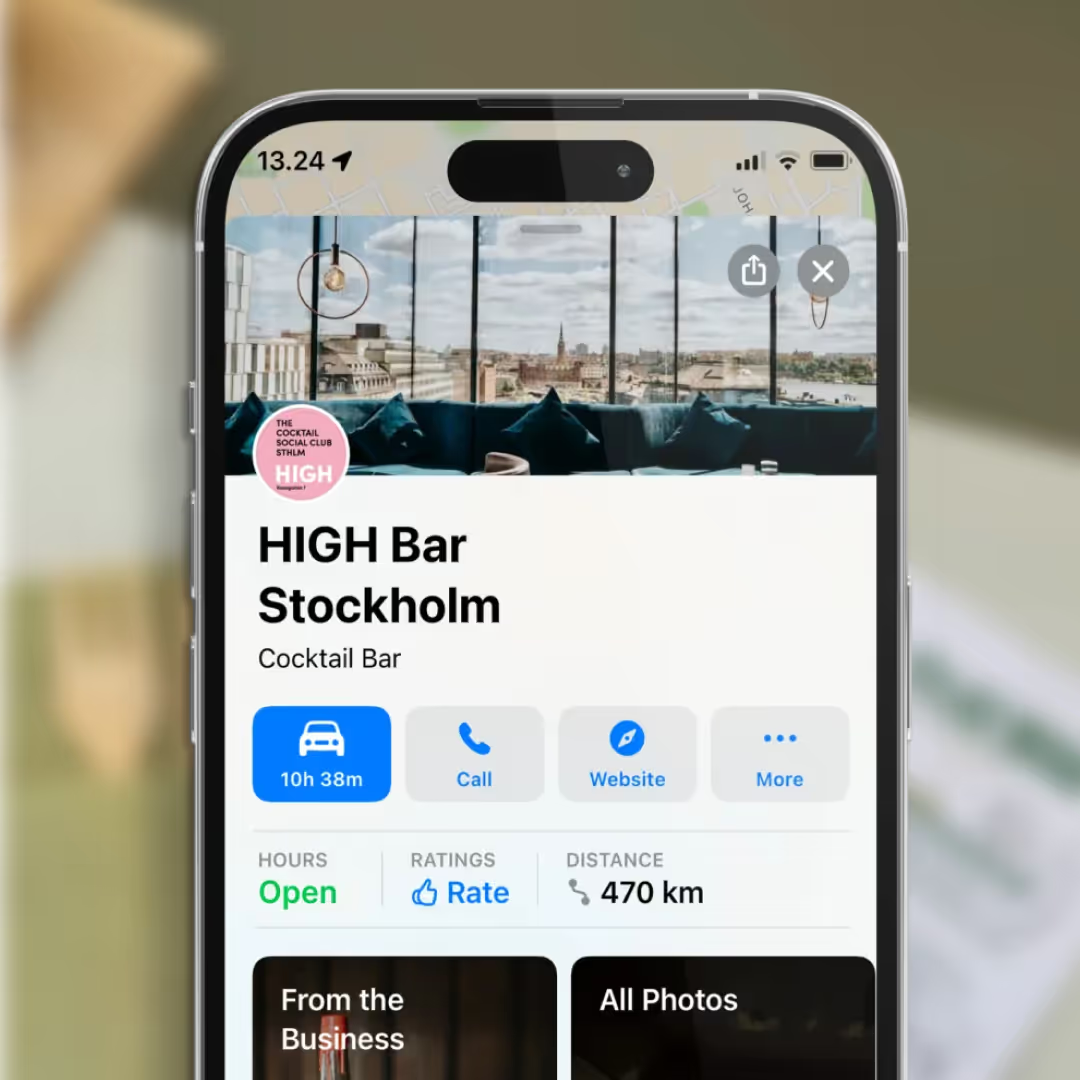
Restaurants already trust Mobal to keep their listings accurate across Google and Apple. The website was the one part of their online presence still managed separately, with a different tool and a different login. Now it's part of the same system.
Every hour your site shows the wrong hours or an old menu is an hour a customer can be misled or turned away. And every evening spent editing a website is an evening away from the kitchen. Restaurant Websites removes both.
Customers can buy gift cards directly on the site and book a table through an added widget like TableOnline. An ordering button links out to your provider, such as Wolt. Your location details, menu, hours, and special hours stay in sync with your Google and Apple listings.
Choose from eight supported languages (English, Finnish, Swedish, Estonian, Russian, French, Spanish, and German) at launch and add translated versions of your site with a few clicks. More languages on request.
Restaurant Websites gives you a strong base built specifically for restaurants: the pages, layouts, and search foundations designed to help guests find and use your site. You can apply your own branding, colours, images, and pages on top.
Yes. You hand over your domain and keep it.
€29 per website per month, as an add-on. You can build and preview a site free in the demo before committing.

.webp)
.avif)



.webp)

.svg)
